To remove lash glue safely at home, soak a cotton pad with an oil-based makeup remover or coconut oil, press it gently over your closed eyelid for 30 to 60 seconds to dissolve the adhesive, then slide the lash strip off in the direction your natural lashes grow. Never pull or peel. The oil breaks down the glue bond so the lash releases on its own.
Here's the full method, plus the mistakes that cost people their natural lashes.
Why you should never pull lash strips off
Pulling lashes off is the fastest way to lose your natural lashes. The glue bonds to both the strip and the base of your real lash. When you pull, the natural lash often comes with it.
Repeated pulling can lead to traction alopecia of the lash line. Dermatology Times reports that traction alopecia from repeated false lash application and removal is a recognized risk for habitual lash wearers, and it can become semi-permanent if the behavior continues.
Beyond the alopecia risk, pulling causes:
- Stretched and weakened eyelid skin
- Broken lash hairs that take 6 to 8 weeks to regrow
- Damage to the hair follicle itself in severe cases
Every time you yank, you're betting against your future lash line.
What you need to remove lash glue at home
You don't need a specialty product, though dedicated removers do work fastest. The basics:
Option 1: Oil-based makeup remover. Anything labeled "oil-based" or "bi-phase" makeup remover. Shake before use.
Option 2: Pure oil. Coconut, olive, or sweet almond oil from your kitchen all work. Avoid essential oils, which can irritate the eye area.
Option 3: Micellar water. Effective for light wear but slower on heavier adhesives.
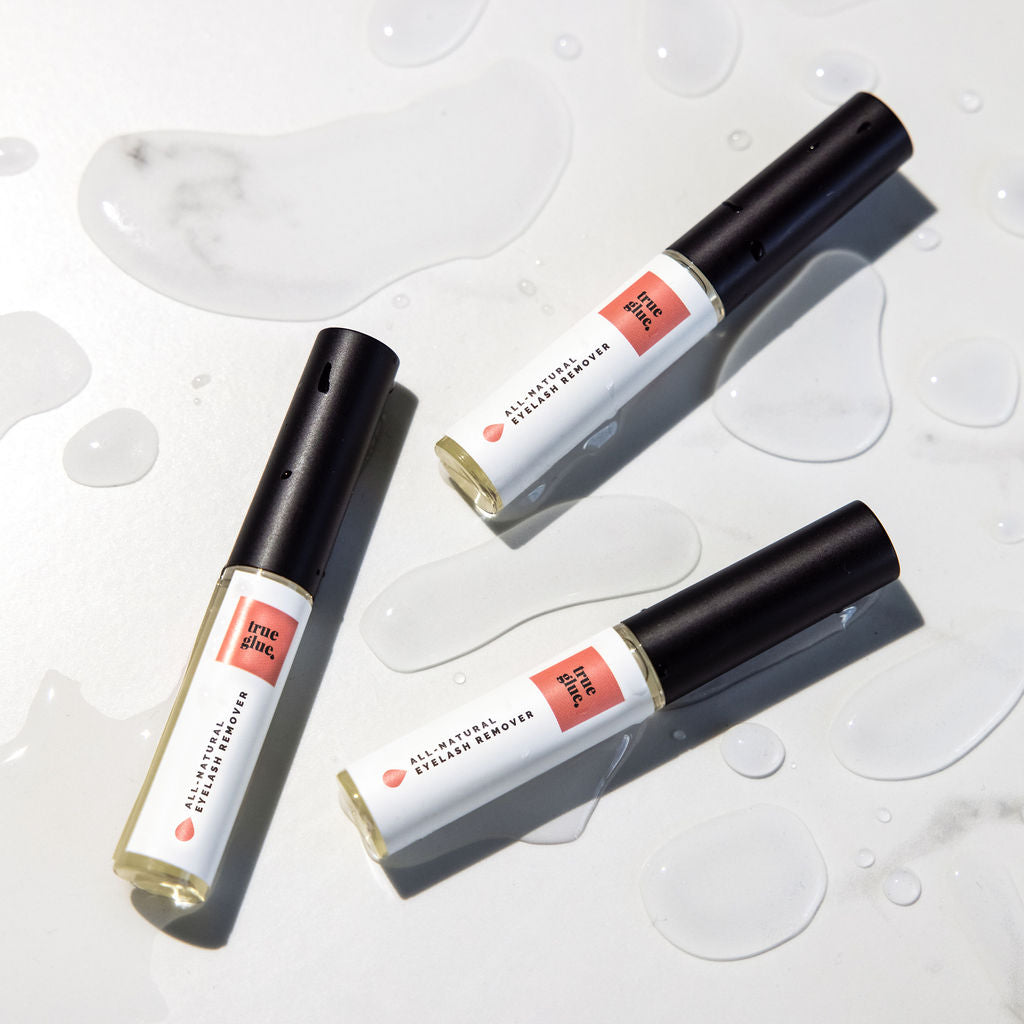
Option 4: Dedicated lash glue remover. Formulated specifically to break down lash adhesive. Fastest and gentlest option for daily wearers.
You'll also need cotton pads, cotton swabs, and a clean towel.
Step-by-step: how to remove lash glue at home
Step 1: Wash your hands.
Anything that touches your eye area should be clean. Skip this and you're inviting an eye infection. The American Academy of Ophthalmology notes that poor hygiene is a leading cause of infection around false lash use.
Step 2: Saturate a cotton pad with your remover of choice.
You want it wet, not dripping. If it's dripping into your eye, that's product going where it shouldn't.
Step 3: Press the pad onto your closed eyelid.
Hold it flat against the lash line for 30 to 60 seconds. Don't rub. The oil needs contact time to penetrate the adhesive bond.
Step 4: Gently slide the lash strip off.
Starting from the outer corner, lift the strip in the direction your natural lashes grow, from base to tip. It should release with almost no resistance. If it doesn't, re-soak and wait another 30 seconds.
Step 5: Remove residual glue from your lash line.
Dip a cotton swab in remover and gently roll it along the lash line where the glue dried. Don't scrub. Roll.
Step 6: Cleanse the eye area.
Wash with a gentle cleanser to remove any oil residue, then pat dry.
Step 7: Apply a lash serum or castor oil.
Optional but smart. This step nourishes the lash line after the stress of glue and removal.
How to clean and reuse your lash strips
If you wear reusable strips, this matters. Glue buildup on the band is why lashes start looking clumpy and refuse to lay flat after the third wear.
- Lay the used strip flat on a clean surface.
- Use tweezers to grip the dried glue at one end of the band.
- Peel the glue strip off in one motion. It should come off as a single rubbery line.
- Wipe the band with a cotton swab dipped in micellar water if any residue remains.
- Store in the original tray to maintain the curl.
Done right, quality strip lashes can last 15 to 25 wears. Pair them with a clean strip lash adhesive and you'll get cleaner removal each time, which extends the life of the strip.
What to avoid
Don't rely on hot water alone. Heat softens some adhesives but doesn't dissolve them. You'll end up pulling.
Don't sleep in your lashes. Mechanical friction against a pillow loosens the strip and the glue, but it also drags on your natural lashes all night.
Don't share lash glue or strips with anyone. Bacterial infections of the eye spread easily through shared lash products.
Don't reuse glue from a previous application. Once dried glue is reactivated with oil, it loses its bonding integrity.
When to see a doctor
Most at-home removal is safe. See a doctor if you experience:
- Severe redness that doesn't fade within 24 hours
- Sharp pain in the eye itself, not just the lid
- Vision changes of any kind
- Significant lash loss in one specific area (could indicate alopecia)
- Crusting, oozing, or unusual discharge
These can signal an allergic reaction, an infection, or a scratched cornea, all of which need professional care. If you've been getting reactions to your current lash glue, our guide on the best lash glue for sensitive eyes breaks down what ingredients to avoid and what to look for instead.
Frequently asked questions
How long does it take to remove lash glue?
With proper technique, 2 to 5 minutes from start to finish. The bulk of that is the 30 to 60 seconds of letting the oil sit on the lash line.
Can I use coconut oil to remove lash glue?
Yes. Coconut oil is one of the most effective at-home options because its molecular structure breaks down adhesive bonds. Solid or liquid both work.
Is it safe to remove lash glue with water?
Water alone won't dissolve most lash adhesives, especially waterproof formulas. You need an oil or a dedicated remover.
Why does lash glue leave residue on my eyelid?
Residue happens when the glue isn't fully dissolved before removal. Re-soak and re-press. If it still won't come off, use a cotton swab with remover and gently roll along the lash line.
Can I remove lash glue with Vaseline?
Vaseline (petroleum jelly) can work in a pinch but is much slower than oil-based removers. It also leaves a heavy film that's hard to fully cleanse.
How often should I take a break from wearing lashes?
At minimum, one full day per week. This gives your natural lashes time to recover from the mechanical and chemical stress of glue.
Does removing lash glue weaken natural lashes over time?
Done correctly, no. The damage comes from pulling and harsh adhesives, not from the removal itself. A clean glue and a gentle removal protocol keep your natural lashes healthy long-term.
What's the best lash glue for easy removal?
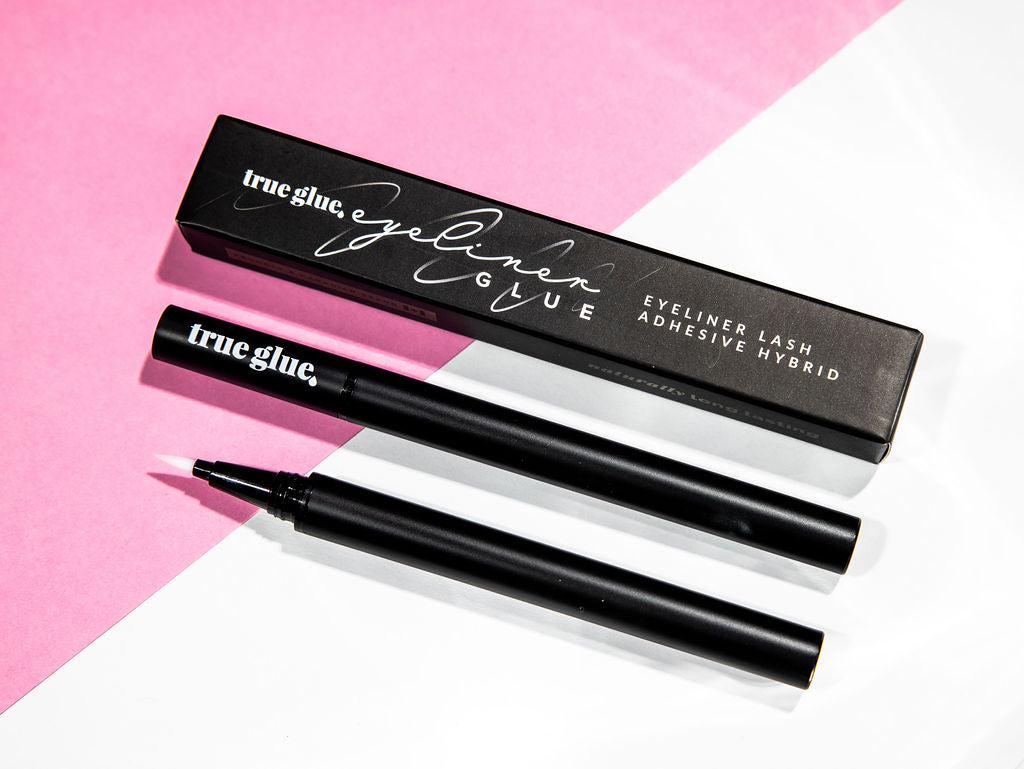
A clean, latex-free adhesive that breaks down with oil is the easiest to remove and the gentlest on your lash line. True Glue Beauty's adhesive was formulated to release cleanly with standard oil-based removers.
True Glue Beauty's clean adhesive was designed to release cleanly with oil, so removal stays gentle every time. If you're losing lashes during removal, the issue isn't your technique. It's the glue.
Shop True Glue Beauty Lash Adhesive →